
"Bio-based." "Eco-friendly." "Plant-derived." "Compostable." If you've shopped for anything plastic-adjacent lately, you've seen these words slapped on packaging like they're interchangeable. They are not, and the gap between them is where a lot of well-meaning purchases quietly fail to deliver what people think they're buying.
Here's the plain-language version:
- Bio-based means some or all of the raw material came from plants instead of petroleum. It says nothing about what happens when you throw it away — a bio-based plastic can still sit in a landfill for centuries, identical to its petroleum cousin.
- Compostable usually means it breaks down under specific industrial composting conditions — sustained high heat, controlled moisture, the right microbes. Toss it in your backyard bin instead and it may not break down at all.
- Biodegradable is the one that matters most, and the one worth checking claims on. It means microorganisms can actually break the material down into natural byproducts, ideally in ordinary environments, not just a commercial composting facility.
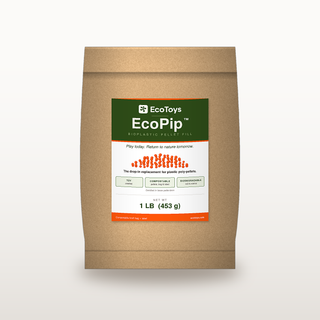
EcoPip is made from PHA — polyhydroxyalkanoate, if you want the technical name — a material that's independently certified as biodegradable, not just marketed as such. That distinction is the entire reason it exists as a product. A pellet fill that's "sort of" eco-friendly isn't actually solving the problem it claims to solve.
Next time you see a green leaf on a package, it's worth asking which of these three words actually applies — and whether the brand can back it up.