The Science Behind Eco Toys
EcoToys are Made by Bacteria.
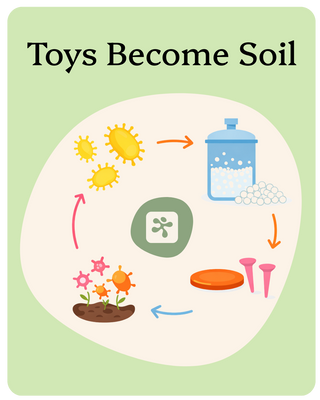
EcoToys are made from PHA (polyhydroxyalkanoates), a biopolymer produced through natural microbial fermentation.
This means our toys don’t just "break down" into microplastics—they actually serve as food for microorganisms in the soil.
Play today, nourish the earth tomorrow.

Most Toys Are Made From Petrochemical Plastics
Most conventional toys are made from petroleum-derived plastics such as
- polypropylene (PP)
- polyethylene (PE)
- ABS, and PVC
These materials are:
- Extremely durable
- Resistant to microbial breakdown
- Designed to persist for decades
That durability works during play.
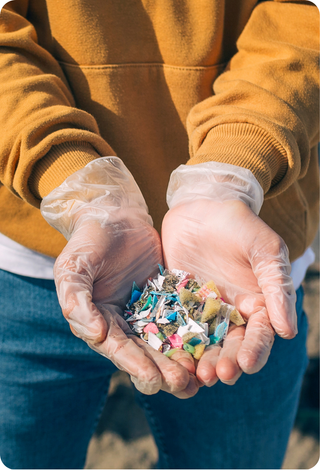
But after disposal, these plastics fragment into microplastics and remain in soil and water systems.
Plastic was engineered to resist nature.
What if play materials worked with nature instead?
The Science Behind PHA

Polyhydroxyalkanoates: The Biochemistry of Regenerative Play
Polyhydroxyalkanoates (PHA) are a class of linear biopolyesters synthesized intracellularly by a wide variety of microorganisms. Within the bacterial cell, PHA functions as a high-density carbon and energy storage compound, analogous to fat in mammals.
THE SYNTHESIS PROCESS
The production of PHA occurs through a microbial fermentation process. Under specific environmental stressors, typically nutrient limitation such as nitrogen or phosphorus in the presence of an excess carbon source, selected bacterial strains initiate the enzymatic conversion of carbon into intracellular PHA granules.
These granules are purified and harvested to produce a raw thermoplastic resin suitable for precision manufacturing.
MOLECULAR STRUCTURE & PERFORMANCE
Structurally, PHA is characterized by a repeating hydroxyalkanoic acid backbone. This molecular architecture enables mechanical performance comparable to petroleum-based polymers such as polypropylene (PP), including:
- High UV stability
- Resistance to moisture and heat
- Significant tensile strength for high-impact play
BIOTIC DEGRADATION AND THE CARBON CYCLE
Unlike synthetic polymers, PHA’s ester linkages are recognizable by depolymerase enzymes produced by common soil bacteria and fungi. When an EcoToy reaches the end of its life cycle, these microorganisms secrete enzymes that cleave the polymer chains into monomers.
These monomers are then metabolized as a microbial carbon source, allowing the material to reintegrate into the natural carbon cycle without generating persistent microplastic residue.
TECHNICAL SPECIFICATION
- Material Classification: Linear Biopolyester
- Origin: Microbial Fermentation (Non-GMO Strains)
- Processing Method: Thermoplastic Injection Molding
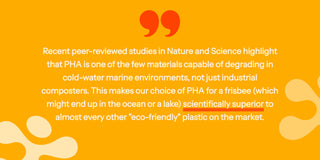
- End-of-Life: Certified Soil & Marine Biodegradable
How it Breaks Down
When exposed to microbial-rich environments such as soil or compost, PHA can be metabolized by microorganisms. Rather than fragmenting into persistent microplastics, it is broken down into natural byproducts:
- Water
- Carbon dioxide
- Biomass
Under active soil or compost conditions, PHA materials can biodegrade within months to a few years, depending on temperature, moisture, oxygen availability, and microbial activity.