
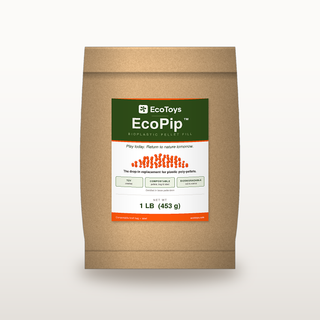
If you make plush toys, weighted blankets, sensory tools, or anything else that lives or dies by its fill material, you already know the tradeoff nobody talks about openly: plastic pellet fill works great and it's an environmental dead end, or it's marketed as "eco" and it doesn't perform.
EcoPip exists because that tradeoff shouldn't have to happen.
It's a PHA-based bioplastic pellet fill, engineered to match the weight, drape, and pour characteristics that makers already expect from conventional poly-pellet fill — no re-engineering your pattern, no different stuffing technique, no compromise on how the finished piece feels in someone's hands. It's independently tested as biodegradable, so a product filled with it isn't quietly adding another few ounces of forever-plastic to landfills every time it's made or eventually discarded.
For makers, the appeal is straightforward:
- Drop-in replacement. Same handling, same equipment, same process you're already using.
- A genuine sustainability claim. Not a green label slapped on a plastic pellet — an actual material difference you can explain to your customers without over-promising.
- A growing expectation, not a niche one. Buyers of handmade goods increasingly ask what's inside before they buy. "Biodegradable fill" is becoming a real differentiator, not a nice-to-have.
Whether you're filling weighted blankets, plush animals, sensory tools, or something we haven't thought of yet, EcoPip is built to be the material you don't have to explain apologetically. Reach out if you want a sample to test in your own process — that's the fastest way to see the difference.